GROTUS' ACORN

God girl grill gridiron
Showing posts with label I'll buy you a coke. Show all posts

Friday, October 22, 2010

Tonight's menu : pie

I am not a violent person.

But there is one particular situation that arises, year after year, that briefly pits father against son in my parents' home - a simple matter of greed. Ironically, this happens every year at Thanksgiving. Unironically, it involves my mother's pecan pie.

There are certain things, good things, great things, for which it is difficult to be strictly thankful.  This pie is one of them. Instead of the humility of simple gratitude, this pie provokes a closer emotion to arrogance. It is not accepted as it should be, democratically alongside the peas and pearl onions, cornbread dressing and green bean casserole in the culinary realm of God's blessings.  Those are comfort foods, of which this pie is not - it is just too good to be comforting.  It is to be seized, then lorded over the hapless opponent, another mere serf to the pie, yes, but the serf who loses.  I have nearly been stabbed over this pie as my father and I - the love of her life, the firstborn child - lay claim not to a slice, not to a half, but to the entire pie.  Nay, to all such pies, that have been and that will be - to the very principle of my mother's pecan pie.  This is a prize from which there can be no retreat, and from which only her mildly shocked cajoling can drive us.  I'm serious : nearly stabbed.


What can be done, when a pie is as good as drugs?  When it only arrives once or twice a year, already at bay as your dad has a head start and you must drive four hours to contest the affront of his claiming it?

First of all, never assume that your mother's pecan pie will deign to set plate in your own kitchen, coax it though you may with attempts at replication.  Such is error. Your custard is nowhere near as good as hers. Your nuts will be too many or too few, and never as sweet. Give up on that perfect crust that stands firm and flaky under its doughty weight of perfect filling.  Your kitchen is a grubby realm of commonplace and thoroughly average gooey nut pies, not the temple this dessert deserves.

Do as I have done and strike out on some new limb of the pie family tree : make a pecan pie, douse it with gran marnier as it emerges from the oven and set it on fire with a blowtorch (true story, and delicious.) Make a pie with walnuts, with dark brown sugar, or with rum.  And return to your mother's table in November, with necessary ardor and willingness to do violence.

It's in this vein that I discovered on my yearly sojourn the Kentucky Derby pie, close cousin and lush country relative to mother's platonically-ideal confections. Like the noble pecan pie, it is at heart a crust filled with custard over which lays a chewy layer of pecans. But its custard is thick with chocolate, and like anything associated with Kentucky (and the Derby,) struck through with a shot of bourbon.


My first attempt at the pie met with alloyed success. The execution was flawed : the chocolate chips I used didn't melt through the custard, and each bite might contain a burst of Kentucky Derby chocolate or typical gooey pecan filling. But despite this error, it was devoured in short order. My second attempt - tonight, that is - satisfied all expectations. A thick chocolate custard, blanketed by and impregnated with chunks of pecan. A buttery shortbread crust. A warm, pudding-like interior.  And it is delicious.

I find the more I cook that the best single representation of my flavor palette is Coca-Cola : dark citrus, dark sugar, nutmeg, cinnamon, nuts, and spice.  So take note that both my pies were made not with bourbon, but with its slightly spicier cousin, rye, and the second got a couple dashes of bitters for good measure.  Thus, it's no longer a Kentucky Derby pie per se, and must be rechristened.  I'm struggling.  The name that came to me first was Talladega Pie, given that Talladega is sort of a Kentucky Derby for Alabama, from which my family hails.  But the wife was having none of that.  "I don't want those people to get the credit!" she protested.  In my head, I tell myself she's confused Talladega with Tuscaloosa.  In any case, the pie remains unnamed.  Buy you a Coke if you think of a good one.

I have a feeling that this pie will suffice until, come Thanksgiving, I square off over the sideboard for another slice of the pie that is better than drugs.  What's that?  You want another shot of an oozingly delicious pie?  You got it, partner :


Too bad you can't be here to eat it and by too bad, I mean, too bad for you.  Not for me.  What has two thumbs and is going to eat the slice of pie that would have been yours?

...old habits die hard.  I swear I wouldn't stab you over this pie.  Honest.

Here's how this unnamed and completely delicious pie is made:

Purchase or make two 6-oz shortbread pie crusts, and toast them in a 350 degree oven until they have a nice aroma.  (So much of baking seems to come down to smell.)  I bought Keebler crusts and that's cheating and I don't care, because I have an awesome pie.

Mix all the following together, probably in this order, to form the batter:
1 cup light (as in, not dark but also not "lite") corn syrup, heated for a 1:30 in the microwave
6 ounces good eatin' chocolate (60% cacao or more) mixed into the hot corn syrup so it melts evenly
1/2 cup unsalted butter, browned.  This step is essential.
1 cup demerara (or similarly full-flavored) sugar
A good shot of rye whiskey.  You could probably use any dark liquor.  You could also, probably, leave it out.  But are you making a Kentucky Derby pie, or what?
1 teaspoon vanilla
1/4 teaspoon salt
A dash or two of bitters

Whisk four whole eggs (about a cup's worth) the mix them into the batter.  Just make sure nothing's hot enough to scramble your eggs (though if it is, you've got one hell of a microwave.)

Pour pecan pieces into each crust, and make it more than enough for the top layer of a regular pecan pie - you want to end up with a layer of nuts on top and some more nuts buried on the pie.

Then, divide the batter between the crusts, covering the nuts.

Bake at 350 for about forty minutes.  The pies will puff up a little and have a decent set when they are done.  Eat warm, or eat cool, with whipped cream.

Friday, May 15, 2009

Monopoly Properties

Edit: WIFE! WIFE! WIFE!

Recently, I was playing Monopoly with my darling wife. The first game, I got lucky and bought all four railroads and the orange set of properties. I leveraged everything for hotels and won that game handily. But the second game brought the nightmare scenario: all properties purchased, no monopolies.

Rather than restart the game, we began bargaining. I resolved to hold firm until I got a deal that favored my cause - don't look at me like that, she's more competitive than I - and rejected a couple of her trades right off the bat. But then, she offered me one I couldn't pass up. I had two out of three green squares (heretofore my favorite properties) and two out of three red squares. She had two out of three yellow squares. Her proposal: trade her the last yellow property and one of the reds for the last green. I eagerly accepted, again mortgaged everything to buy houses... and got completely hosed. I looked at her yellow properties - three hotels - and looked at my greens, with three or four houses apiece. Needless to say, successfully running that gauntlet was never going to happen.Now this was remarkable - the orange properties clearly annihilated the a block of properties three full blocks ahead of them. Clearly, there was some hidden pattern that one could exploit in a trade. Of course, my nerd-sense was piqued. "I can feel an Excel spreadsheet coming on..." I said. She just shook her head.


BTW: I'm just a single nerd. Any nerds who want to CMIIW, well, I'll buy you a Coke.


Here's the board in question:


Property cost increases in a fairly continuous manner as one travels around the board. If we exclude the purples and the dark blues, cost of property begins at $100 and increases by $20 every time the last or first property in a block is reached. Likewise, house cost increases stepwise by $50, with the first flight of properties requiring $50 per house, the second requiring $100, the third requiring $150, and the fourth requiring $200.


Taking them together, we can plot the cost of attaining the different states (0 houses, 1 house, 2 houses...) for each property:


One can already see that the two twin-property blocks (purples and dark blues) don't fit the trend - they are simply too cheap to develop because you only have to buy two of them to start building houses. This is obvious, of course. What I hadn't expected was that price would peak at the green properties - Boardwalk and Park Place require a slightly larger initial investment per-property, but are still cheaper to develop than their preceding neighbors. The green properties are the most expensive to develop on the entire board.

Rent increases in a continuous yet idiosyncratic manner:


Trends are less illuminating here. We notice the gradual increase from left-to-right, and the fact that no single property charges less rent than any property before it. But other than that, there doesn't seem to be any unifying trend. The behavior in the mauve block is particularly weird, and again, the twin-property blocks are outliers.


But how do those trends interact? Monopoly's nut and bolts are proper investment - therefore, one should form a trading strategy that maximizes return on investment. Of course it's true that merely breaking even on a property does not mean you've bankrupted your opponent. However, breaking even does mean that you've spent less money on that property than your opponent - the soul of good development. So I figured one could roughly model a property's success rate by calculating the probability that the greedy landlord will recoup their initial ante.

First, we must calculate the ratio of rent to investment. For a single, naked property, that would be the rent you collect divided by the purchase cost of that property:
and for a property with houses:
This number shows us how much money one gets in rent as a percentage of the money you invested into the property - the efficiency of investment. I calculated this number for all states of the property (zero houses, one house, two houses, etc.):


A visually-pleasing color-coded version, you say? Voila:


Another trend becomes evident: the first block of properties in a flight is less efficient than the second block. You pay the same for a house in the red block as you do in the yellow block, but you get less rent out of it. Thus, while no property charges less rent than any property before it, some properties charge less rent per dollar invested than some properties before them. IE, they have a lower . Also, it's important to see that the first half of the board already seems much more efficient than the second half, per-land. This is pretty critical. And lastly, it is interesting to note that efficiency has an S-curve, reaching a peak derivative at the third stage of property development. increases slightly on adding the first house, moreso with the second house, increases the most dramatically with the third house, and there are diminishing returns from then on.

From we can calculate the number of times the property must be landed upon in order to fully recoup the investment:
Pretty simple. The number of times one must land on the property is the number of times that the rent goes into the investment:


This number is useful when we consider the probability of landing on each property. It is conceivably possible to calculate the probability of landing on each property based on its position - I don't know how to do that. Lucky for us, a helpful guy out on the interwebs has done just that:


Note: he's approached the game differently than I. Take that as you will.

He has determined the probabilities based on two different game strategies. The "short" strategy is an early-game strategy in which players pay to get out of jail as quickly as possible, so to buy up property. The "long" strategy is a late-game strategy in which players stay in jail as long as possible, so to avoid paying rent. This strategy increases the probability of being in jail a little less than three-fold, which we would expect - players may stay in jail until they pay, roll doubles, or three turns have passed at which time they must pay $50 and leave. For the regular properties, this means the probability of landing on any property space is somewhat decreased. There are some weirdnesses associated with that, but I'm really not qualified to discuss them.

First, notice the random peaks at Illinois, New York, Boardwalk, and St. Charles. You can be sent to all three of these properties directly by chance cards. New York is a lesser peak because its card is "Go Back Three Spaces" which has different effects based on which of three chance locations you have landed on. You can also be sent to Go, Reading Railroad, or to Jail by cards (or by the Go To Jail square.) All of this tends to weight the front half of the board much more heavily in terms of probability. Essentially, the probability peaks around free parking (though this doesn't explain why I never land on free parking and my wife always does. Go figure.) This shows us that while the earlier properties may not draw as much rent, you do land on them more often.

So how do those two trends (required lands and probability of a single land) interact? Now that we know the probability of landing on each square and we know the required number of landings to recoup investment, it is simple to calculate the probability of breaking even. If a certain event has a probability A, the probability of that event occurring B number of times is A^B. So, the probability of recouping an investment in a single Monopoly property by landing only on that property is:


A graph of that is pretty interesting. Here are two graphs, for "short" and "long" strategies respectively:


First off, I know what everyone is already thinking: Park Place/Boardwalk appear bizarrely awesome, total outliers. Likewise, Mediterranean Avenue and Baltic Avenue appear absolutely worthless. Within the middle eighteen properties, where a strong trading strategy is less immediately intuitive, the function clearly points to a sweet spot around the mauve properties. In particular, it points to the light blue properties - somewhat of a surprise. If Monopoly was the Houston Rockets, then Connecticut Avenue would appear to be Shane Battier.


But that still doesn't tell us everything. After all, one does not buy single properties in Monopoly. One buys streets, the success of which is dependent upon the success of all two or three properties therein. Calculating the successfulness of each block is a little trickier. If you're a math geek and I've made an error somewhere, step in. Here's my approach. What we need first is the rent which we are likely to be charged if we land within a certain block. This is not the simple arithmetic mean of the rents being charged on all three properties. If Baltic charges $1,000 and Mediterranean charges $1, the arithmetic mean is $500.50. But if Baltic gets a land 1% of the time and Mediterranean gets the remaining 99%, the true likely rent value is much closer to $1. We really need to model the land as two events: landing on a certain block, and landing on a particular square within the block. The process is akin to a current divider, or partial pressures in chemistry. If a player lands within a certain block, the probability he will land on a certain square is the independent probability of landing on that square divided by the probability of landing on any square in that block (the sum of the probabilities.) We can then multiply the resultant probabilities by their corresponding rents, and add these together to get a probability-adjusted rent for the entire block:


= probability of landing on a particular property (n) in the block
= probability of landing on one of those properties (IE, sum of the probabilities)
= the rent charged by that property (n) with a certain number of houses (h)
And the graph thereof:


Note: in this calculation I've assumed that all three properties would have the same number of houses. I may have some time on my hands, but I don't have the kind of time I'd need to calculate all 4,032 combinations.

Investment, likewise, was calculated by summing the costs of all three properties, plus the cost of all the houses:


Rent/investment ratio is calculated as before, but with the adjusted values:


And of course, the charismatic colored version:


And again we graph the reciprocal, which shows us the number of lands necessary to recoup investment. Nothing new here, there is an abrupt dip at the orange block:


Broadway's grip is slowly weakening...

For the calculation of whole-block probabilites, the value used for probability is the sum of the probabilities of the squares within each block. Compared to the earlier graph of probability (which is somewhat of a mess) this one is exceedingly clear. Probability peaks somewhere around free parking:


Using these recalculated values, probability of recouping investment is calculated as before
...giving us this graph:


And it's rather profound. The orange properties are easily the best on the board - even better than the vaunted Broadway and Park Place. And my beloved green properties? Nasty, nasty bad. The maximum probability of recouping your investment on the greens is 0.0004, or 1 in 2500. Comparatively, the maximum for the orange properties is 0.05, or 1 in 20. This does not mean that buying and developing the orange properties will bankrupt your opponent automatically - the greens obviously have more "killing power" per land. However, they get landed upon so infrequently and are so expensive to develop, you hurt yourself far more than your opponent.

Sunday, April 5, 2009

"Hello?" "This is Aquaman. Don't worry." "Worry about what?"

I never knew a fortune cookie could be ominous, until I got this one today:


What aid will I soon require, O mystical pseudo-Chinese pastry? What mighty forces have chosen this bastardized polygonal confection as their mouthpiece, their prophet, their 911 operator? Good evening, sir. The A-Team will arrive in the nick of time. Do not call or email - all lines are monitored by your enemies. Signed, your squirrel nut zipper.

This is merely the most recent successor in a long line of bizarrely incomplete cookie-borne admonitions. My favorite up to now was this half-pearl of wisdom:
All truth goes through three stages. First, it is ridiculed. Second, it is reviled.
What? Third, what? What happens to the truth, fortune cookie? What happens?

I'll buy you a Coke if you once got a strange fortune cookie that might complete these bizarre transmissions. Something like "Third, Jon Stewart will stare at it with palpable incredulity" or "42". Or more pertinently "You are being secretly stalked by velociraptors, but don't worry because"

If it's the latter, let me know sooner rather than later.


Update:


Sullivan013 is quick on the draw, busting out Schopenhauer. Congratulations, sir - if you're thirsty, I'm sending the pause that refreshes in your direction.

Friday, October 24, 2008

The first coke has been claimed


By Nate! In a comment on a recent post, he suggested two occasions in The Swamp that could be the game that sparked my deep admiration for the Tiger defense. I'm almost certain it was '94. But you know what the kicker is? Just you read, wait till the very end when he twists the knife. He writes:
You're either thinking of (maybe) 1993:

http://query.nytimes.com/gst/fullpage.html?res=9F0CE1DB113BF934A25753C1A965958260

or 1994 (more likely, with 5 picks in the game):

http://www.auburnundercover.com/news/story.php?article=332

Either way, Roll Tide. :) [emphasis mine]
Ouch! Ladies and gentlemen*, I just got schooled by a Bama fan, indelibly on the intertubes for my future children to see. Mark this day down. And he just had to say it. I've half a mind to mail him a warm can of diet Pepsi. But no. We here are Grotus' Acorn are men of our word, giving credit where it's due.

In all seriousness, thanks go out to Nate for puttin' that to rest - War Eagle!


You can email me at rahien.din@gmail.com to claim your well-deserved Coke, by whatever method you choose. If you live near Winston-Salem, or will be in Richmond Virginia this weekend, I may just deliver it myself.


* I'm sure there must be some of each.

Thursday, October 23, 2008

Take me home to a place I belong.


What a terrible season. And what a terrible game.

In spite of our bottomless cellar of defeat, I was looking forward to our Morgantown brawl. Earlier on Thursday I took the second round of nine-hour computerized standardized tests to which all medical students are subjected - I was mentally exhausted after two weeks of study and a long day under the microscope. But the game was on - what luck! My fiancee, in the utmost kindness, urged me to watch. Cider in hand, I settled in. But what transpired was our season in perfect miniature. A nerfed offense, a bewildered defense, and just enough of a bright spot to make you think if only we had...

But what? If only we had what?

It was especially painful to me because we were playing West Virginia, a team who I've followed with some delight the last few years. I loved the spread and shred's ingenious combination of option power running a la the single wing and the hypermodern spread passing game. I couldn't get enough of the bandit 3-3-5 defense that they run and all its blitz-havoc potential. I had a huge man crush on Owen Schmitt. Honestly, when I heard Auburn was going to the spread this year, the thought of West Virginia on the plains made me nearly delirious. I looked at Lester, at Burns, and Ziemba and thought we're better than them already. Cue PPL. Cue Tristan Davis and Mario Fannin. Lights-out... right?

We all know how that turned out. The wrong version of the spread was haphazardly installed in a team that wasn't prepared for any version of the spread, and it was then mismanaged. The defense inexplicably bent and broke and broke again. Desperation. Panic. Chaos.

So when I watched that game... when I watched the play-action screen go for a first down, the zone read run to perfection, simple swing passes rocket through our secondary like Patriot missiles... I thought if only we had done that. And in a bizarre, Stockholm Syndrome-like turn of events, I kind of turned off. It was fun watching West Virginia's plays succeed, because they were good plays and well-executed. Yes, it sucked mightily that it was happening to Auburn, but in West Virginia I saw a shadow of the Spread Eagle and I exhaled.

Like Isaac, who watched his eldest son sell his birthright and himself was deceived, as I watched my Esau of the plains get clobbered by the mountaineers I could only think this is what what I wanted for you.


The Offense
fries at the bottom of the bag


We sure surpised 'em right up front, going to the power and powering our powerful way down the field. The first half was the classic Tuberville grind-like-a-six-ton-millstone offense. But then they adjusted and the 2008 incarnation of the power looked worse than 2007's. Then we had to go back to the spread because our defense was hemorrhaging points, and the spread looked worse than the 2008 power. We gained 27 yard in the second half, fourteen of which came during garbage-time prevent-defended Kodifying.

Sigh.

My gut is tellin' me our stripped-down playbook doesn't allow us to make significant adjustments at halftime, which explains why defenses stone us with such regularity. We might get ahead for a half, but they figure out what we're doing, game-plan to stop it, and take care of business. The business of giving us the business.

But that's sort of encouraging for the program on the whole. It means that we are still as talented as Auburn is ever rumored to be, even though we only play half a football game offensively. It was very satisfying to never even get a glimpse of Barrett Trotter, as Kodi did a good job of accurate throws and well-timed runs. And it warmed the cockles of my heart to see our backs punishing the mountaineers for their overpursuit. Did I mention that Tommy Trott caught every well-thrown ball sent in his direction, for multiple first downs?

Those guys are really the fries at the bottom of the bag. War Damn Eagle!


The Defense
"The fundamentals of the [defense] are strong."


Pat White's two turnovers in the first half were all to the defense's credit. The one was a fantastic heads-up play by Bynes to end a long would-be-scoring drive, and the second was a good throw under pressure that Walt MacFadden flat-out stole and God bless him for it.

But the fact of the matter is that West Virginia did basically whatever they wanted - the game was not as close as the scoreboard would have you believe. And we can't blame it on the offense any longer, as the Tigers dominated time-of-possession right out of the gate - in fact, the defense took the field on the first possession and let West Virginia right into the red zone. Their first drive went like this: incomplete, complete for 13, rush for -2, rush for 22, complete for 8, complete for 7, int. And in my humble opinion, that PA screen to the mid field would have found our men well out of position had Josh Bynes not sniffed it out. In the second quarter, when the offense was moving methodically and keeping our defense happily rested, Noel Devine took off down the field for consecutive runs of 20 and 36 yards on the first two snaps of a drive. The mountaineers punted once. You just can't say the defense got worn down when they looked exhausted the entire game.

Other tiger fans may be more adept at reading this defense, may be more schematically attuned. So I'm offering these up mostly as questions: four main things I saw that really bother me:

1. Linebackers covering receivers
Rhoads has been extremely willing to play 4-3 against the three-wide and nickel vs. the four-wide. This might be a good call, considering our linebackers are really beefed-up strong safeties. And I can understand that man-for-man our linebackers are George Patton compared to the callow youths that inhabit our secondary. But when were in the nickel, for instance, often I'd see one linebacker blitz and the other drop into a hook zone. This leaves a lot of the field undefended, and it puts a safety on the slot receiver. The choice of formation just isn't getting the job done. This wouldn't be so much of an issue if not for...

2. Ineffective blitzing
We had three honest-to-God blitzes that stick out to me. The pressure that forced the screen pass to Josh Bynes, and the two sacks. The two sacks were things of true beauty that wrung out my adrenal glands, perfect storms of angry young defenders swirling in from all directions and closing down on Pat White like a burning house. (Sure, we did have a number of strong moments in the run defense, but these were entirely offset by the remaining plays in which we were nearly unable to defend the run at all.) Other than that, the pass rush was non-existent, even when Mike fired down and the offensive line had to man-block. As we had been cracked up to be, our line should be able to get pressure from Doolittle, Coleman, Goggans and co. when it's one-on-one blocking. But we don't.

3. Single tacklers
The pride of the Auburn defense under Chizik and under Muschamp was the swarming tackle. Some poor sap would get the ball and instantly be buried by three, four, five Tigers. But those days seem to be gone. Now, instead of tackling in parallel, the Auburn Tigers tackle in series, whereby a ballcarrier must break four tackles in succession rather than break all four simultaneously. Again, this may be a choice of scheme, but it isn't working because....

4. Auburn will miss the first tackle
Unless Antonio Coleman or Josh Bynes was tackling, this was painfully true. A single white jersey usually meant broken ankles and broken tackles.

Now, we also gave up yards because we bit real hard on West Virginia's option attack, but I think we had to because of #2 and #4 - they boil down to not controlling the line of scrimmage and not tackling. This defense is simply not performing its fundamental duties. Against teams that have a pulse*, they will lose a battle that our offense can not win in a single half. Against effective running teams, the defense is going to get romped on. LSU snockered us, Arkansas embarassed us, West Virginia leveled the dental playing field, and I don't need to remind anyone here that the two most effective running teams left on our schedule constitute Amen Corner.


Special Teams
God bless you, kick return game

If there's any one unit we needed to flourish, it was the kick return game. And by God it was electrifying! Hat's off to you, Fannin and Davis.

The rest of the special teaming was largely irrelevant. Durst was phenomenally unlucky on the bounce, but the defense didn't exactly make it matter. Likewise, Byrum didn't exactly contribute to the loss with his hook.

The return game, though - wow!


Coaching
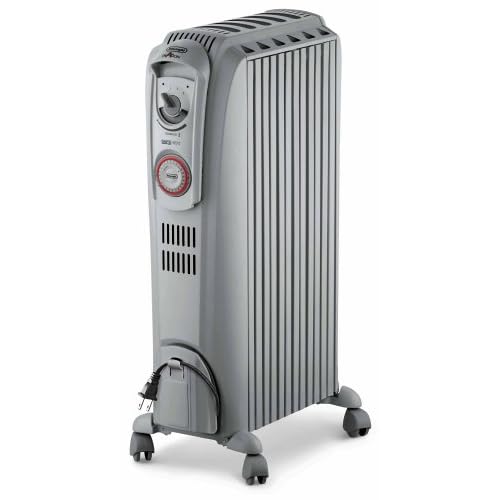
for want of a kingdom, a space heater was lost


Tommy Tuberville is livid.

In what was surely the most enlightening bit of in-game commentary that I will ever hear, the ESPN commentators pointed out that our sideline heaters were off. Deliberately. As in, you're gonna be cold until you play like men. I'll buy you a coke if you can tell me the last time Tommy Tuberville - or any other Auburn coach - was so clearly furious and resorted to such means as hypothermia to motivate his team. Or even needed to.

What do you make of it? Tuberville's been cool as a cucumber for as long as I can remember, even in the midst of humiliating, soul-crushing defeat. And now this?


Auburn tigers, please, someone disabuse me of the notion that if we can handle UT-Martin, we will lose seven games this year.

War Damn Eagle, always.


* In 2008, "having a pulse" means you are Vanderbilt, Arkansas, Tennessee if they had a quarterback or an offense that by many accounts came into this game in worse shape than ours.

Friday, October 10, 2008

Anything but.

Disclaimer

Consider this my attempt to forget about football for a little while.

I could get the Arky game on ESPN360, but will be celebrating good food and engaging in amateur enthnomusicology at the Richmond Folk Festival. Cajun food + Inuit throat singing = yes. So maybe I'll stat-box the game on Monday, or simply read whatever excellent analysis is turned out by the blAUgosphere. If we're lucky, we'll duplicate this stunning anti-performance. In any case, War Damn Eagle. I just need a break from the insanity.


Oh and by the way: Jerry's written an especially poignant open letter to booing fans. Required reading. I'm glad I wasn't there to hear them project their frustrations onto a team of young men to whom the game is immeasurably more meaningful. Damn - what does that indicate, Auburn tigers? I'm glad I wasn't there to see us? Ech. This is one God-awful season.


in what is to be a shiny new Grotus' Acorn recurring feature
...gimmick

Introducing: I'll buy you a Coke.

Everyone has those moments, the one where you're scratching your head trying to remember that witty thing Herbert Hoover said, so long ago. Or the chief export of Nicaragua. Or what year it was that Auburn scored, like, four defensive touchdowns and bollocks on offense to upset Spurrier's Gators in the swamp.

We are fortunate to live in the golden age of Google and Wikipedia, which can reliably answer many of these questions and in the blink of an eye. But for many trivial yet nagging bits of information, we must still rely on the oral tradition and subject matter expertise.

Which is where you come in. These things nag at me in particular and have been known to gnaw on me for days and days, but I've devised a way to let someone else take care of it. I'll buy you a coke if you can tell me. That is to say, I'll either ship you a 20oz bottle (which I can not guarantee will arrive cold and unshaken) or I'll somehow pay you the going price of an ice-cold Coca-Cola in your locale. Hell, if I know you (or, perhaps, if you live nearby,) I'll drag you down to the 7-11 and buy you an elixir of the South in person. The necessary stipulations:
  1. No Pepsi products, no 7-Up, no Snapple, etc. I'm a Coke guy (who isn't? they should be) and while I've been known to slug a Diet Pepsi Max, I consider its caffeine levels to be purely medicinal and as such it is inappropriate for a reward. I may make exception for an RC cola, provided it's to be drunk with a cheap bag of peanuts.
  2. Speed wins and to the victor go the spoils. You can post comments on this here blog, email me at rahien.din@gmail.com, you can do whatever you like. Hire a plane to drag a banner by the hospital and if I see that plane before I see anyone else's, I'll buy you a coke. Just be first.
  3. Preferably, there would be some verifiable source backing up your answer. Preferably, but not absolutely.
  4. If I find the answer first, well, guess who gets the Coke? Mmmm...
For the inaugural offering, I'll ask you this: sometime, I think in the late nineties, Auburn played Florida in the Swamp. The heavily-favored gators completely dominated our offense, but our defense gobbled up multiple turnovers for scores. Their epic performance propelled us to victory in what would become standard Auburn offense-is-another-kind-of-defense fashion. I remember watching that game and remember it as a seminal moment in my growth as an Auburn Tiger, transfixed as I was by the glory of half a football team winning out over such an opponent - but for the life of me I can't remember when it was.

Any ideas? I'll buy you a Coke.


Dr. J versus Kath and Kim
incidentally

Those of you who eagerly awaited the return of The Office this past Thursday were in for a real treat: the pilot for Kath and Kim, which is mostly played out at the mall. Hopefully you were spared, but if you're an Office-phile like me you weren't.

For the pop-culture comparison, we have Dr. J, calmly intoning that he can understand why Dr. Pepper is better when savored slowly, because half his life has been lived in slow motion. One of the two is funny because it's true, one is wrenchingly unfunny because it's equally true. Three guesses as to which is which.